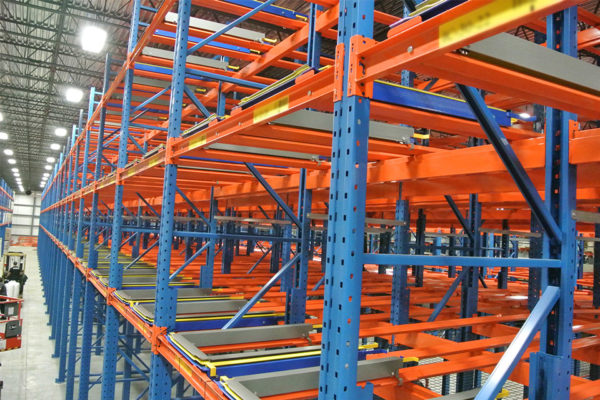
Maximizing Warehouse Efficiency with Pushback Racking
In the ever-evolving landscape of warehouse management, maximizing space utilization while ensuring easy access to inventory is a constant challenge. One of the most efficient solutions to address this challenge is the implementation of pushback racking systems. This article explores how pushback racking can significantly enhance warehouse operations by improving both storage density and operational efficiency.
Understanding Pushback Racking
Pushback racking is a type of pallet storage system that allows pallets to be stored on either side of an aisle, maximizing storage space. Unlike traditional racking systems, pushback racking offers several advantages:
- Increased storage capacity by utilizing depth rather than height.
- Enhanced selectivity compared to drive-in racks.
- Reduced aisle space due to its design, leading to better space utilization.
For more technical details on this racking solution, read more about this topic.
Benefits of Pushback Racking
Improved Storage Density
Pushback racking systems are designed to store pallets up to four to six deep, allowing warehouses to compactly store goods in a smaller footprint. This efficient use of space is ideal for businesses looking to maximize their warehouse capacity without expanding their physical location.
Enhanced Inventory Management
The design of pushback racking systems supports a LIFO (Last In, First Out) inventory management strategy. This is particularly beneficial for products that do not require strict adherence to a first-in, first-out schedule, such as non-perishable goods.
Time and Labor Efficiency
By reducing the need for excessive aisle space, pushback racking decreases travel time for forklifts, leading to quicker retrieval and storage of pallets. This can result in significant time savings and reduce labor costs.
To explore further insights on how pushback racking can optimize operations, explore further insights here.
Design Considerations for Pushback Racking
When designing a pushback racking system, several factors must be considered to ensure optimal performance:
- Load Requirements: Understand the weight and size of pallets to ensure the racking can support the inventory.
- Aisle Width: Optimize aisle width to balance between storage density and operational efficiency.
- Forklift Compatibility: Ensure that the forklifts used are compatible with the racking design.
For a more comprehensive guide on the design and implementation of pushback racking, learn more in this detailed guide.
Conclusion
Pushback racking offers a versatile and efficient storage solution for warehouses seeking to maximize storage capacity and operational efficiency. By implementing this system, warehouses can achieve a more streamlined operation, reduce costs, and better manage their inventory. For additional information on pushback racking systems and their benefits, find additional information here.